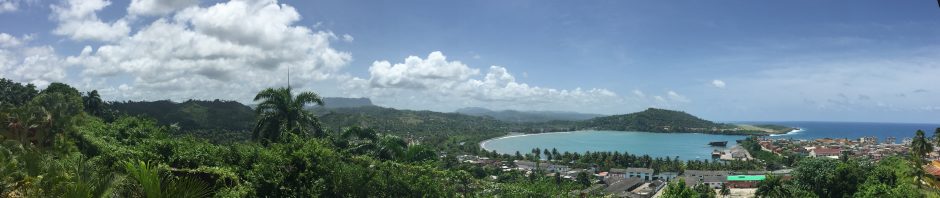
On the Road to Granada
As we arrived at Madrid’s Astochia train station, we were a bit unnerved in realizing that this is where a terrorist attack took place just a few years ago. What prompted the startling recollection of the men in black spraying bullets across train platforms, was the tight security and bag checks. Once inside you would not suspect any horror had occurred. We rode the escalator past a tropical forest under a vast glass ceiling. A bit of Eden and life before the Fall.
The High Speed Train put all of that terror behind us. It became just a blurred memory.
If you have ever watched the beginning of the classic film “Once Upon a Time in the West” (directed by Ennio Morricone) you might imagine my first impression of the Aldatera-Santa Ana station. A chilly wind blew across a stark platform, wide open horizon stretched beyond the seemingly deserted station. The tempo was excruciatingly slow. When was stoic Charles Bronson going to mysteriously appear? Seated in the station, a fly lands on my bag handle at eye level and claims squatter’s rights. Unlike the bad guy in the movie, (actor Jack Elam), I did not have the wherewithal to trap the bug in a gun barrel and listen to it buzz in desperation.
Our bus driver to Granada took offense at the behavior of our seat mate across the aisle. The traveler had pissed on a wall at the bus stop before climbing aboard and so things did not start well. The driver harassed him on the bus and then again before disembarking. Note to self- do not piss off bus drivers.
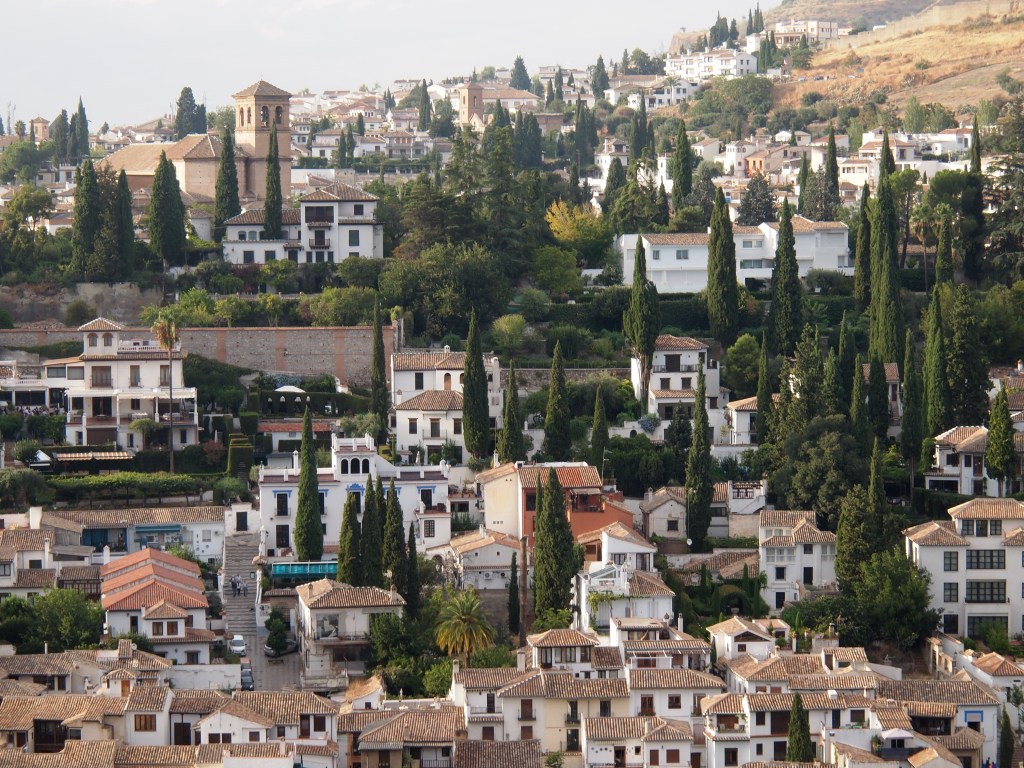
The Granada taxi driver knew where the Hotel America was located. And luckily, we did not need Spanish to clear up any misunderstandings about directions. As we climbed up the hill through narrow streets and several switchbacks, I had a blinding glimpse of the obvious that our hotel was within the walls of Alhambra. The last few hundred yards our driver weaved around tourists who were jockeying for their positions on a determined approach to Alhambra. We parked at the end of the road in front of Hotel America , a two story pensionne wedged into the complex of historic buildings. Up old wooden stairs to our room, I opened the windows to thunder reverberating across the Genil river valley to the Sierra Nevada mountains.
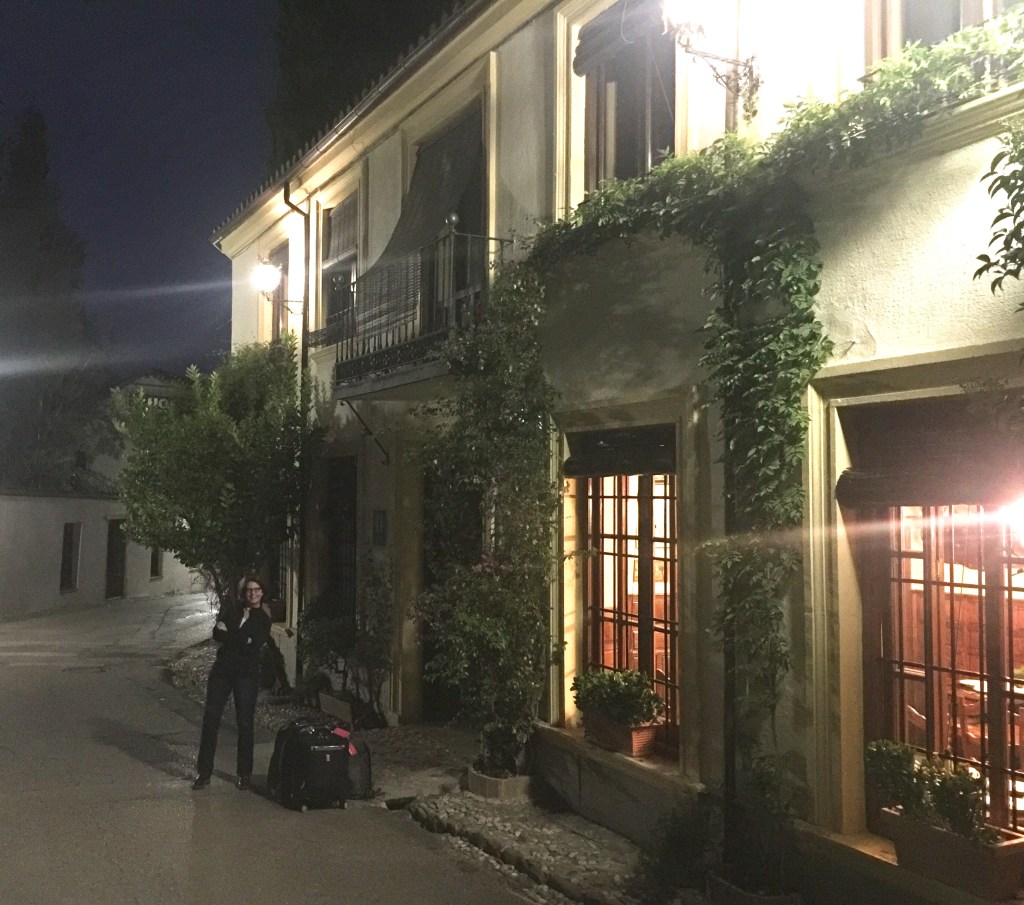
Tempting as it might be, there was no time for a siesta in the extraordinary spot. We had reservations for the Alhambra castle. Salad and pumpkin soup for Michele and Spaghetti Bolognese for me, and we were off to stand in line. Three weeks before arrival, Michele had tried for reservations earlier in the day but many spots were already taken. We had been so intimidated by the strict rules for entry that we came overprepared. No one asked for passports at the door, and we had a half hour window of opportunity to enter after the reservation time. (Rick Steves and the other Travel Guides had unnecessarily put us in panic mode.) One benefit of the late afternoon reservation – the crowd was thin, allowing for clear views of the extraordinary architecture. Surfaces are saturated with design. Each room offers dazzling kaleidoscopic patterns. Though I love artistic patterns and even repetitive patterns, the density of the work is intense leaving you to wonder how you would ever clear your mind for peaceful contemplation. You are surrounded by inscriptions that do not seem to let you get a word in edge wise.
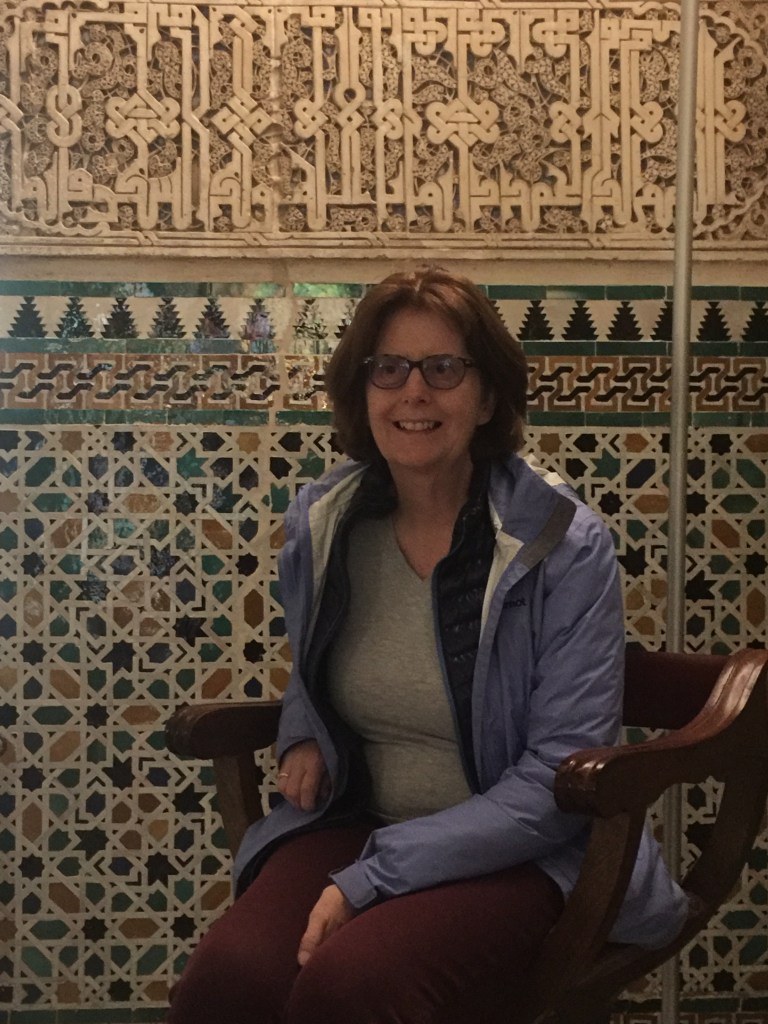
Looking up, the honey combed vaulted ceiling coves resembled the ceilings of mosques at Isfahan in Iran that I visited with my parents when they were stationed in Afghanistan. The decorative tile and form of stalactite vaults do not follow function.
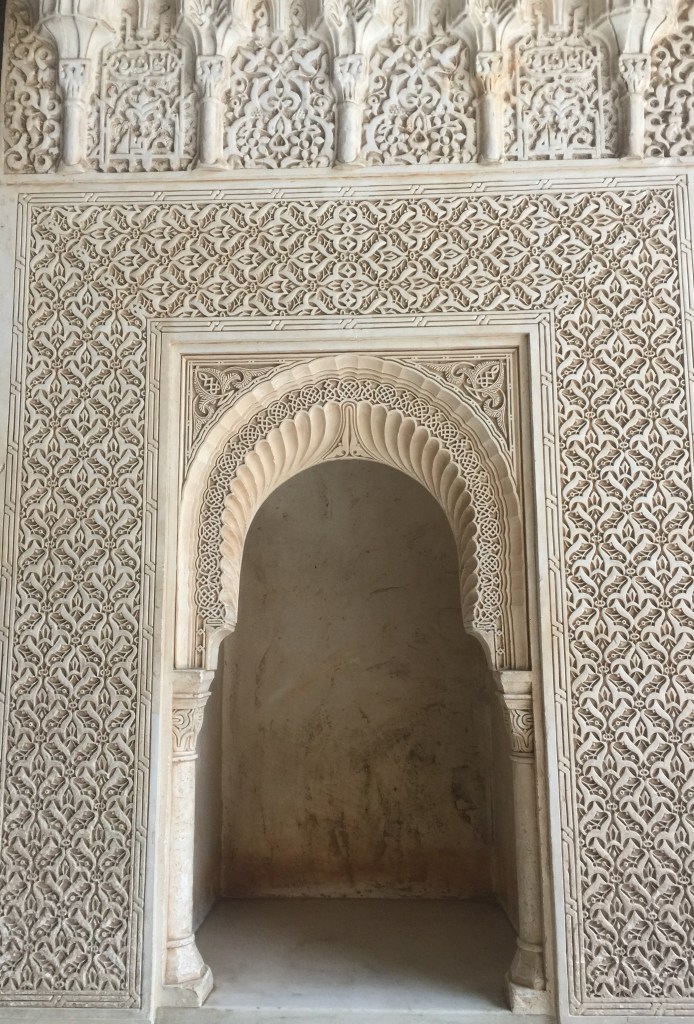
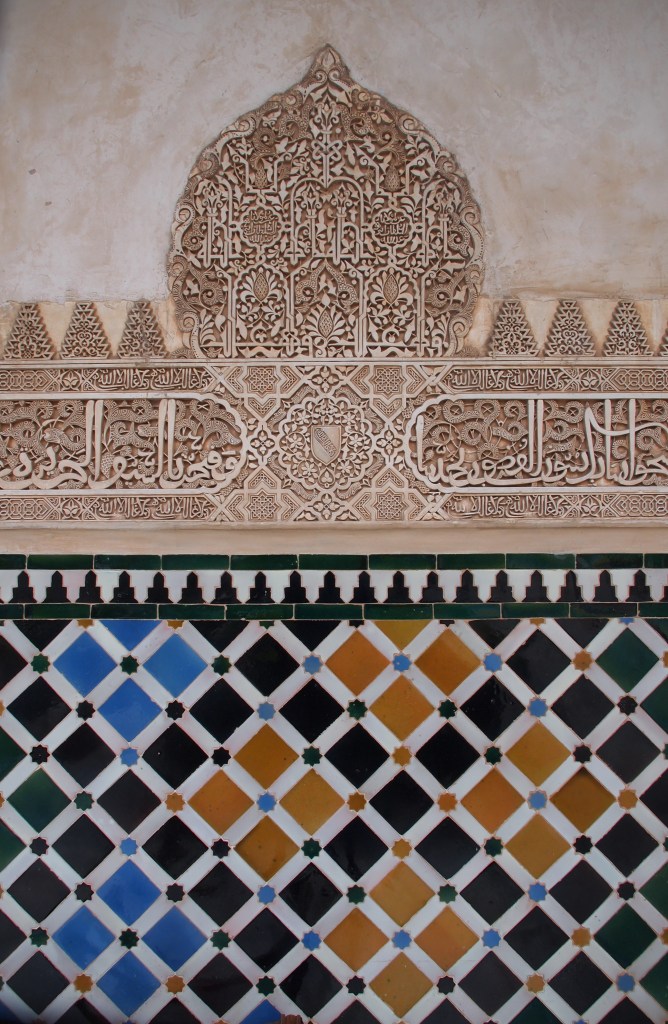
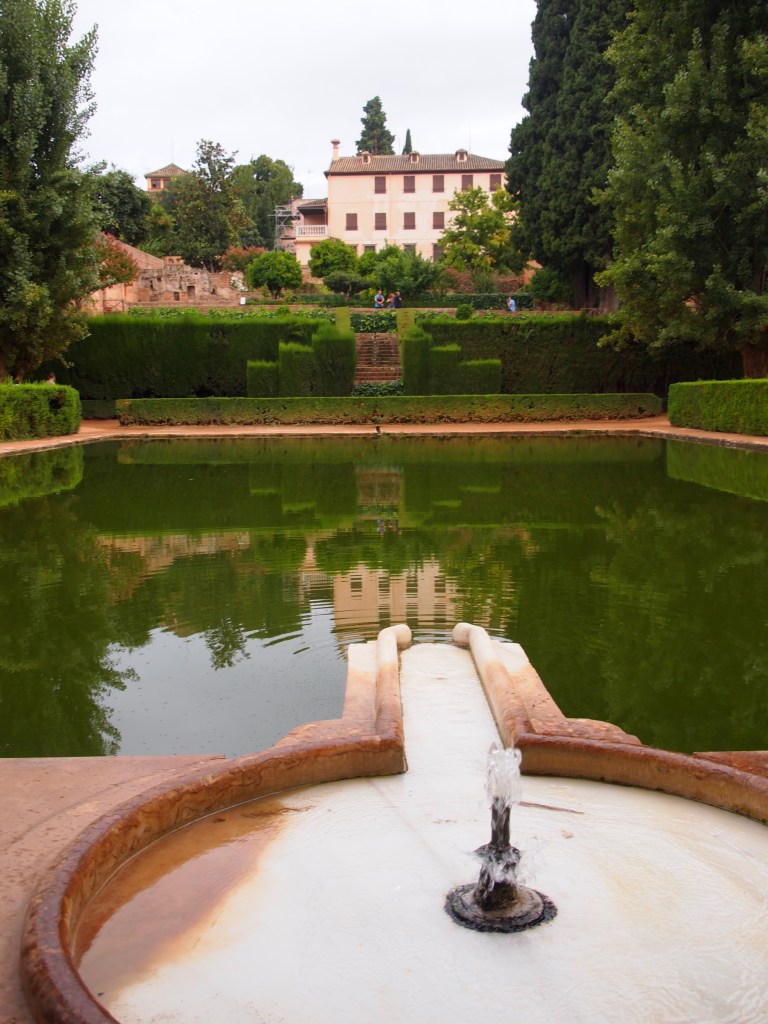
Channeled into pools, water from the Daro River becomes the central focus of several courtyards. (The Moors preferred still water, so no fountains or water sprays to mar the glassy surface.). Water was power in this 15th century location and the Moors engineered a marvel. Apparently for many years after Spain took over Alhambra from the Moors, no one could figure out how the water circulated.
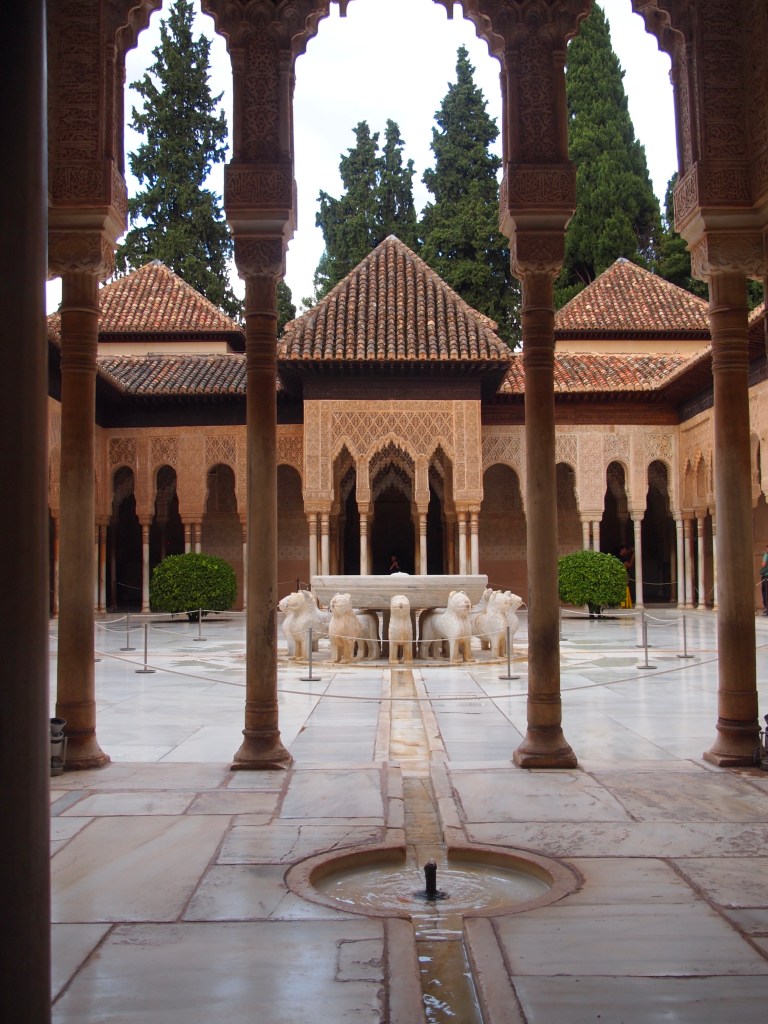
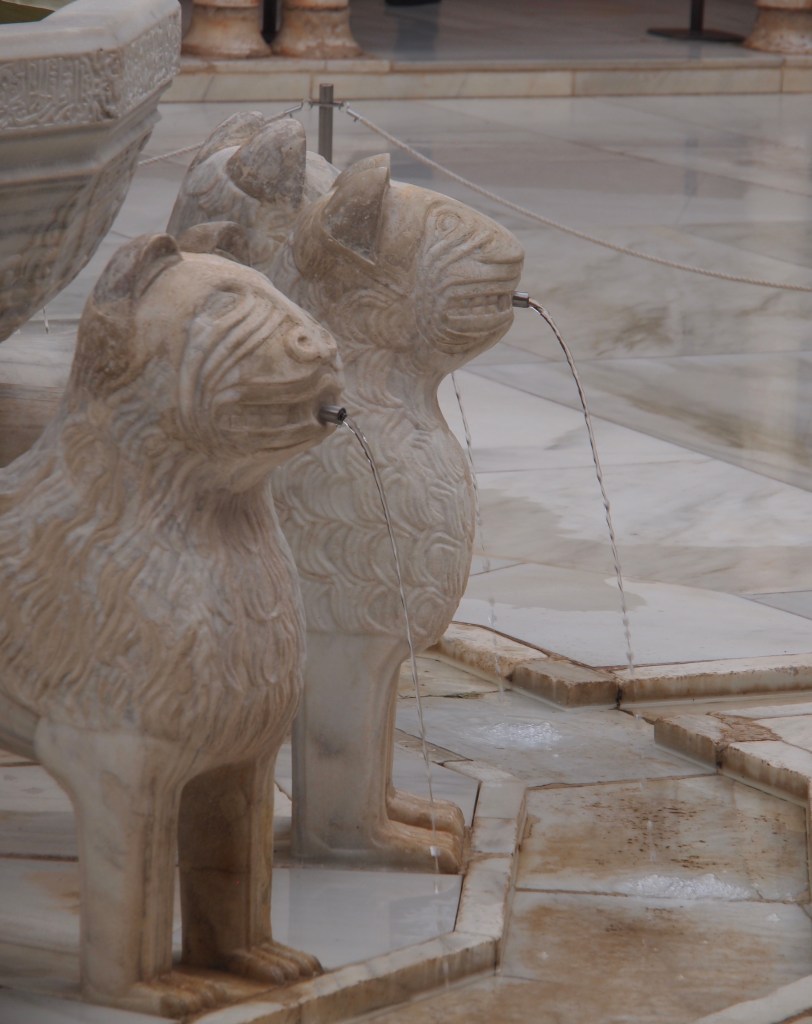
On our second visit to Alhambra, the crowds were aggressive and the experience less intimate. One guy persisted in touching the Moorish inscriptions on the walls. Everyone was posing or grabbing selfies.
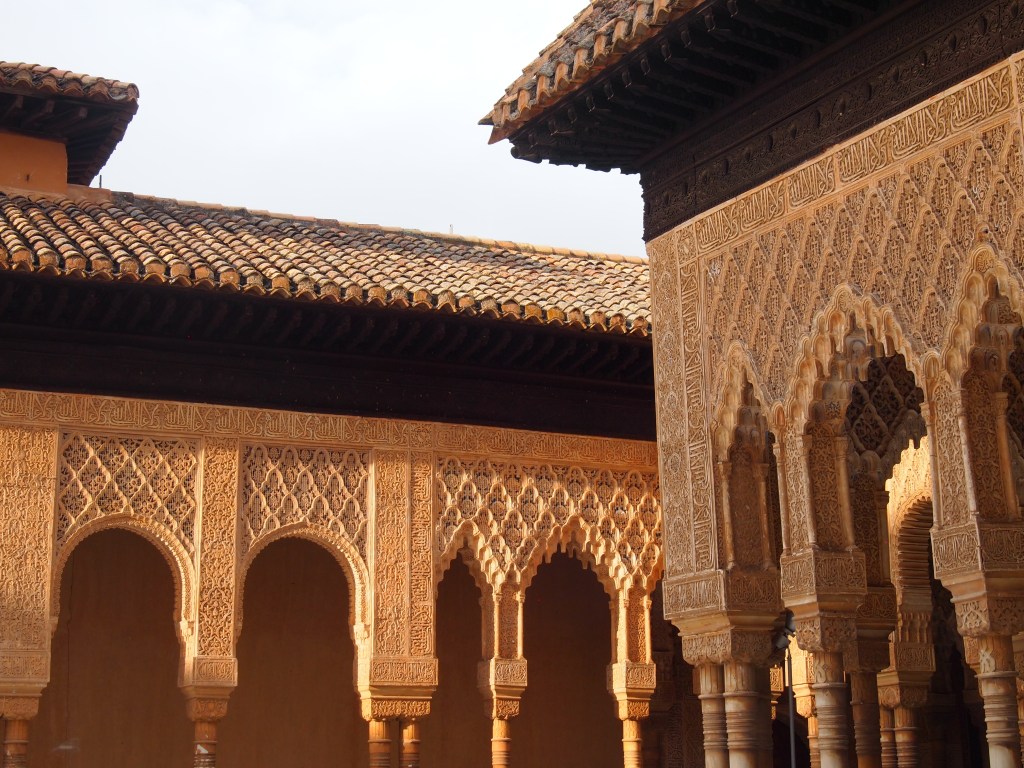
We veered away from the cattle chute to explore the garden. The evening light and exquisite stillness in the landscaped spaces healed the psychic bruises inflicted by the boorish tourists.

Granada
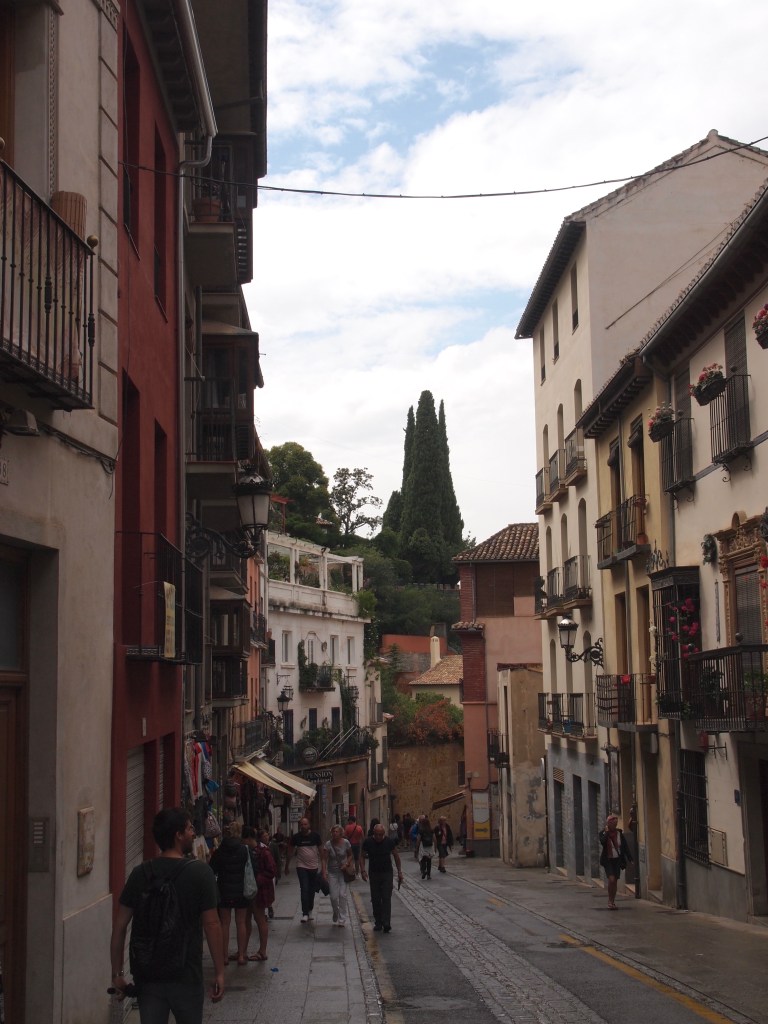
From the Hotel America, we headed down the steep path from Alhambra into town, runnels of water on either side created a babbling sound to accompany our descent. Through a stone gate, the Cuesta de Gomerez road kept a steep grade with tiny tourist shops packed into the hill.
We turned a corner onto Plaza Nueva and a flash flood of people suddenly gushed through the street and we were swept away towards the cathedral.
Before rounding the corner to the Gran Via de Colon, we moved through the Plaza Isabel La Catolica and passed a sculpture of Christopher Columbus negotiating the signing of a contract to explore the New World. The contract unrolls down the monument and the scene reminded me of the Laocoon Group. Instead of the snakes squeezing the life out of Laocoon and sons, the paper rolls out, ensnaring a world of unsuspecting innocents. So much for sailing the ocean blue in 1492. Columbus has been banished from an American holiday, and his legacy disparaged for precipitating major atrocities against indigenous peoples.
The passage into the Royal Chapel was a bit ominous. A seven-foot masked figure of Death lurked outside, with enormous sickle and a plastic skull as tip jar. Death departed at the first sign of rain. The moisture extinguished his spirit and income.
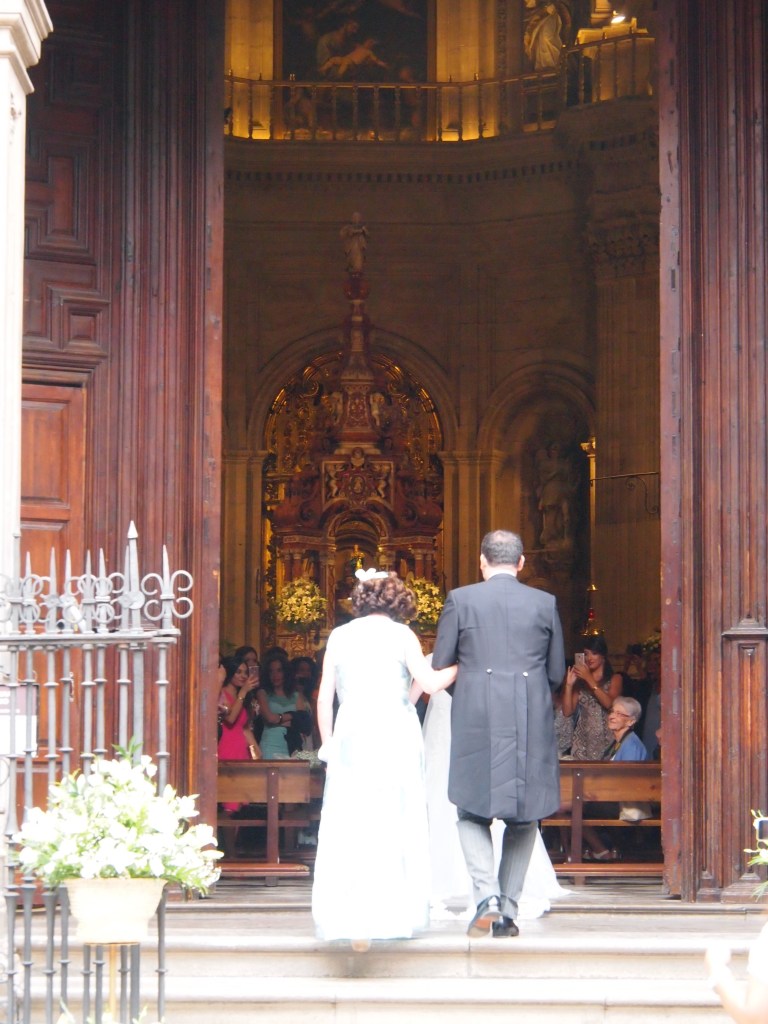
Ferdinand and Isabella are entombed inside the chapel. The two sculpted figures appear peaceful in repose but just feet away the altar looms above and continues with the morbidity theme. Not just the crucifixion is depicted in 3-D but the martyrdom of several saints, including a decapitation. The truncated neck of Saint Denis exposes a bloody open windpipe. The whole display is a medieval graphic novel with all the macabre blood and gore. The gallery of Isabella’s Blessed Madonna and Child paintings could not erase the severed windpipe from my mind.
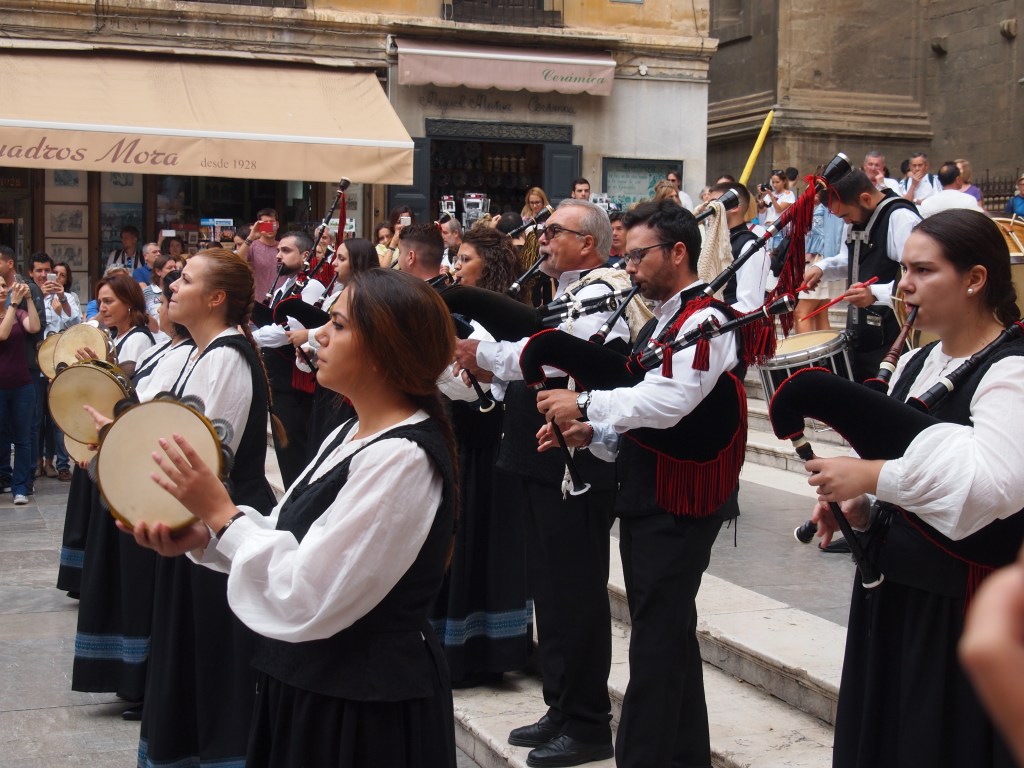
In stark contrast to the Medieval Cathedral across town stands the 18th century Basilica San Juan de Dios. This is over-the-top Spanish Baroque, with a three-story altarpiece blazing in gold. Climbing up to a room dedicated to St John of God’s remains, we were blinded by golden light and garish display of ornamentation.
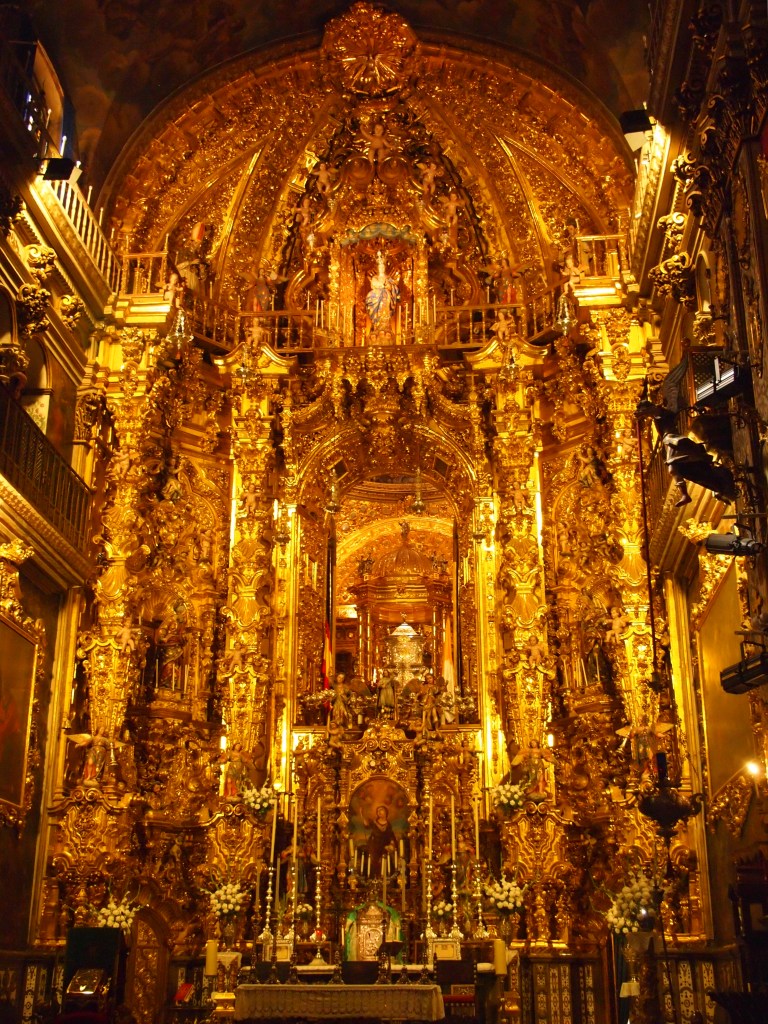
While we paused to contemplate in this reliquary, another tourist decides now is the time to take a call about his lost luggage. I am not a religious guy and not usually on edge over the desecration of a sacred space, but I was praying that some higher authority would tell him to shut the fuck up.
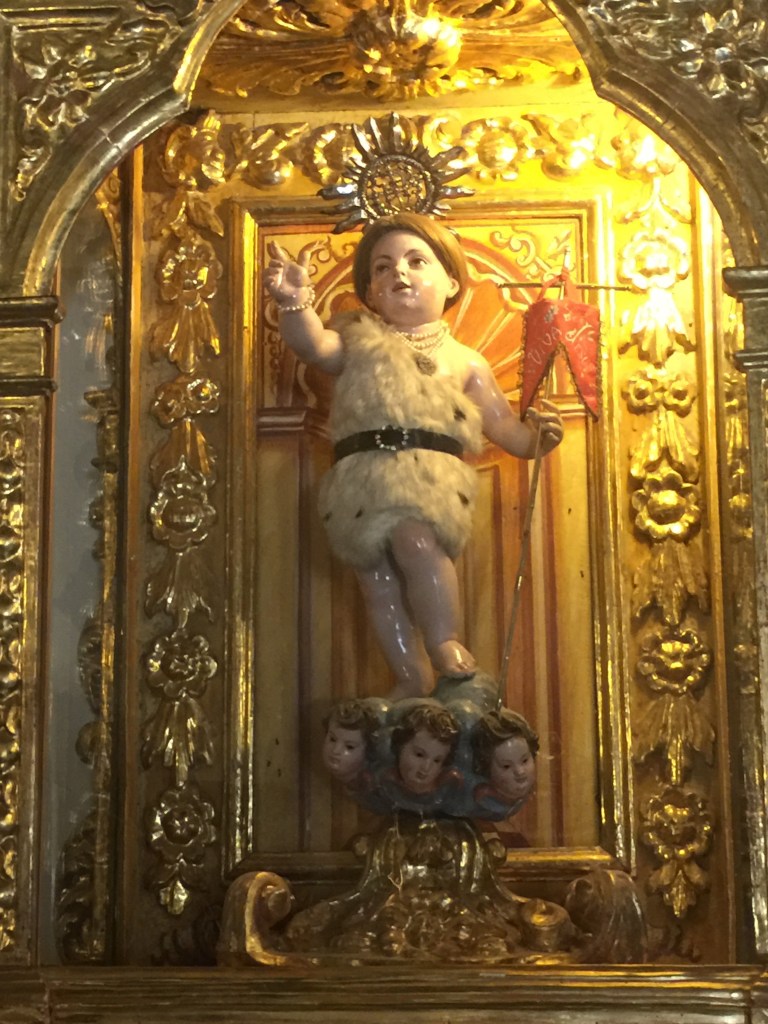
In the nave, not all details are finished in glorious gold. There is a painted sculpture of St John the Baptist’s head on a platter. An appetizer or entre, who’s to know?
Generalife Gardens
Touring the Generalife Gardens is best in the morning light before the shadows of multiple tourists darkened the way.
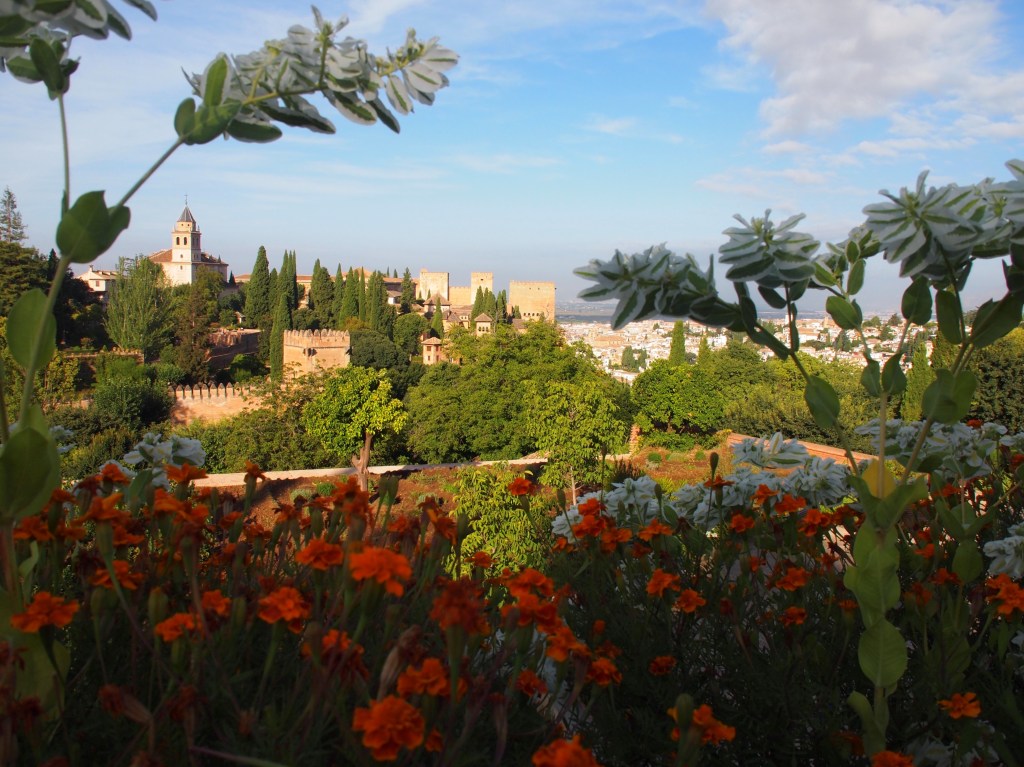
The splashing of the courtyard fountains can be quite contemplative until the growing babel of voices echoes off the walls. We picked up the pace to lengthen our lead. A path leads up past two pools and up a staircase with water cascading down runnels on each side. At the highest point, the water seems to magically gush from the slope.
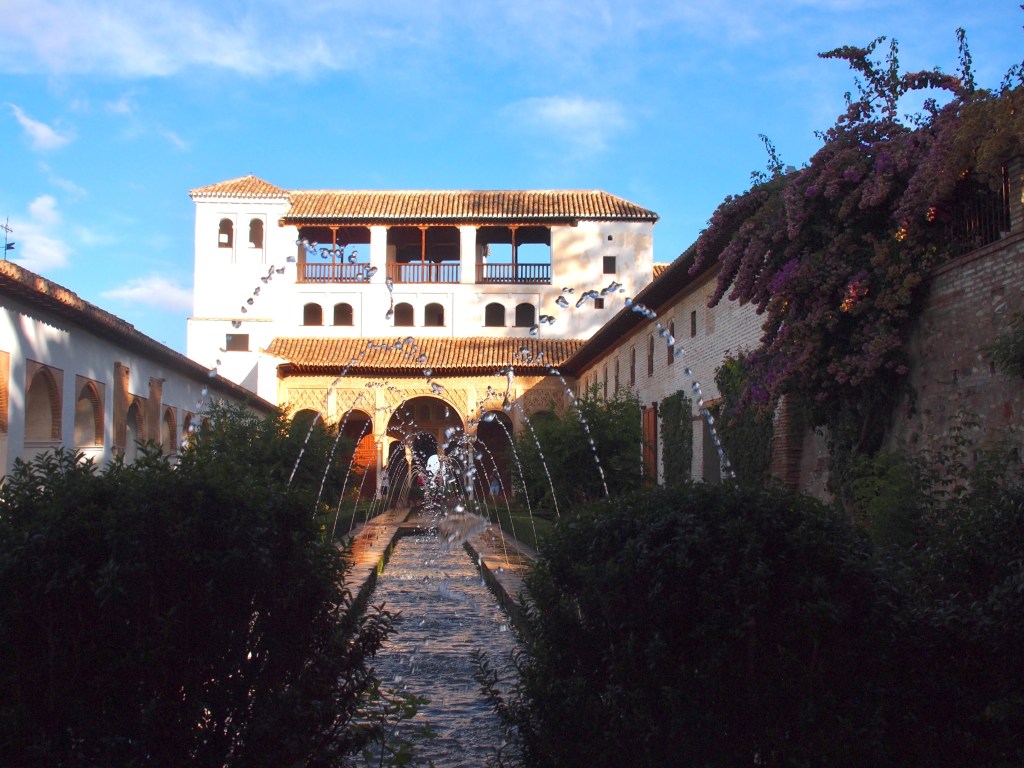
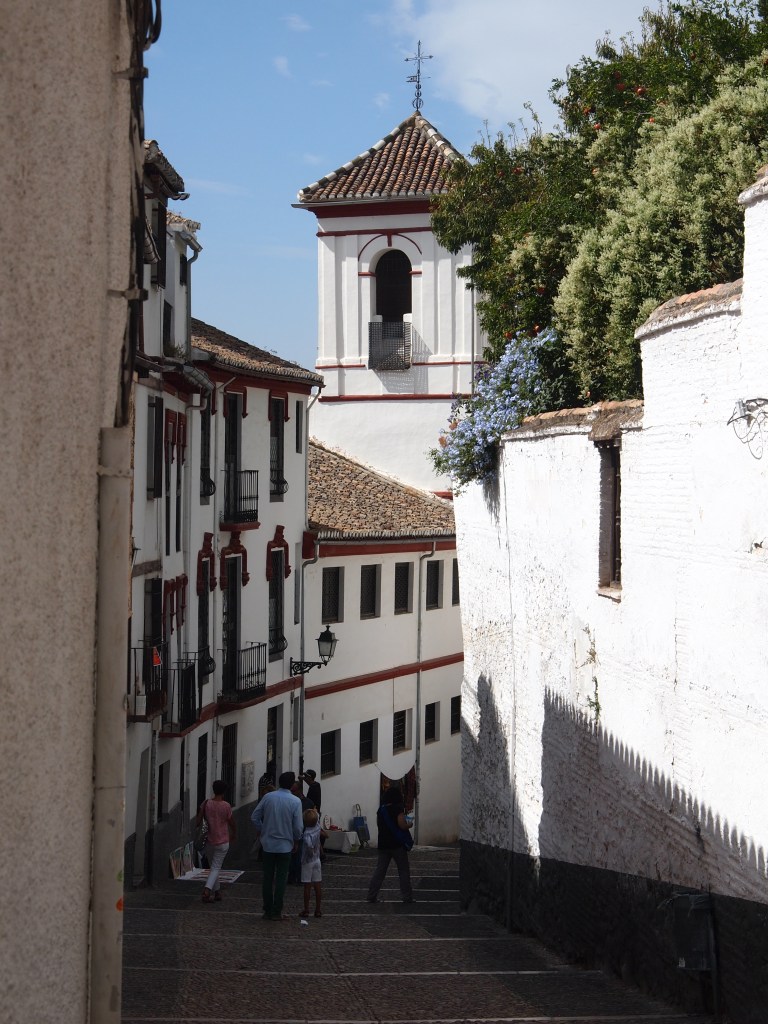
Following the water and path of least resistance down, we walked along Cuesta de los Chinos between the walls of Alhambra and Generalife, crossed the river and then tackled the climb to Santa Iglesia, Santa Isabel La Real and the viewpoint of Alhambra at Mirador San Nicolas. We were startled in turning down a narrow lane to find a few haggard hippies, who we had heard have found refuge in caves nearby. I felt like I had come across Otzi the Iceman, a 5300-year-old tattooed mummy found in the Alps. These examples of early hominid “Cannabisthicus” were remarkably well preserved for their age. We greeted them in an ancient hand gesture signifying peace, thanked them profusely for their invitation to donate to a good cause and left the troglodytes to find their bliss under the warm Iberian sun.
Maneuvering for a perfect photo op position on a wall overlooking Alhambra was not easy. All the tourists were playing musical chairs. You needed a keen eye and reading of body language to know what person was finished posing and was ready to move. Once we landed a spot, there is no time to waste since the hordes are now waiting to pounce.
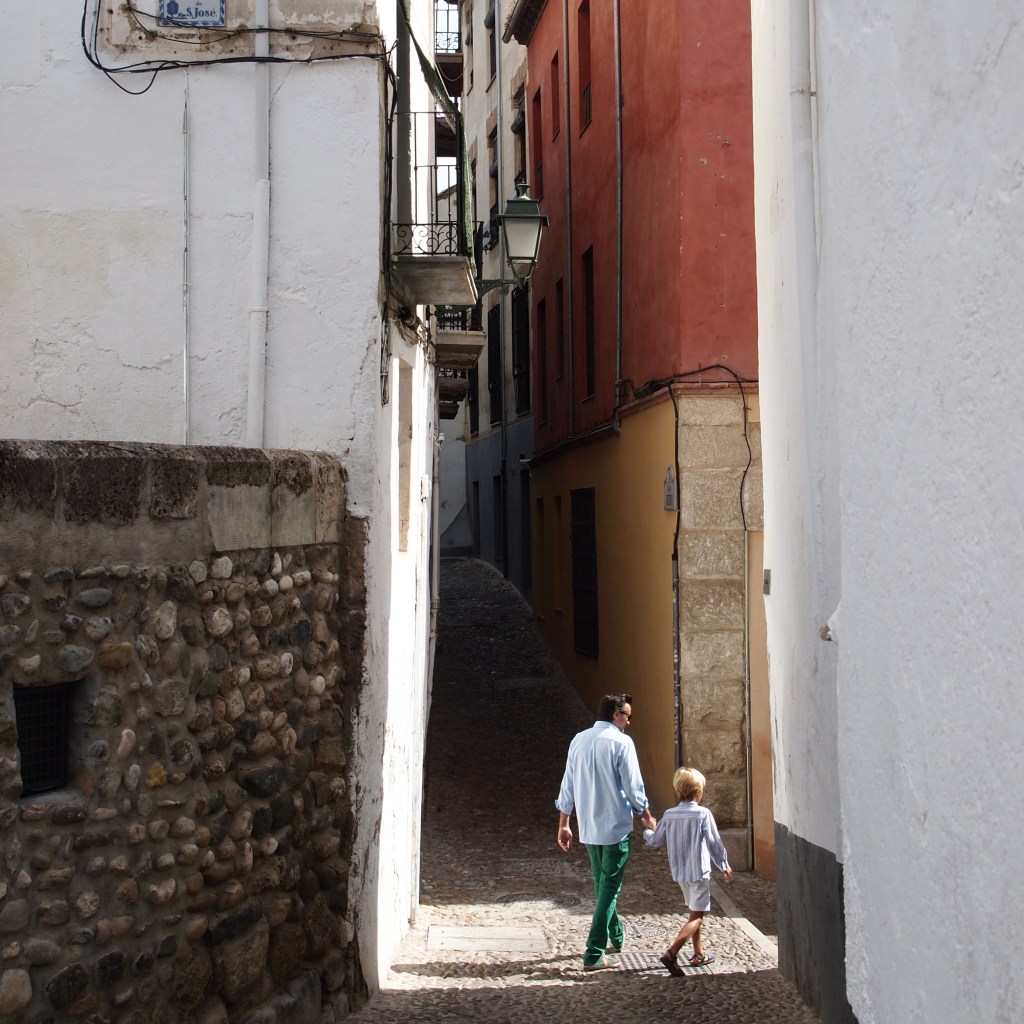
On the lower slope, a casbah of small shops with colored lanterns and cafes with cheap eats lined the narrow corridor. Merchandise spilled out onto the cobble stones.
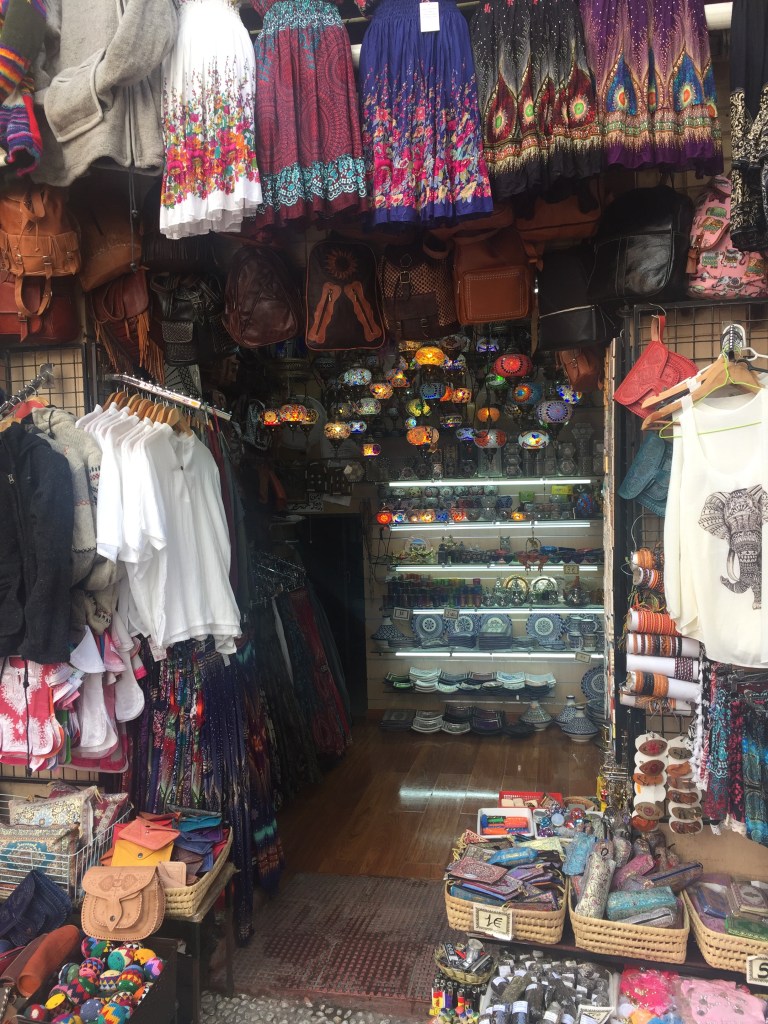
A “déjà vu” force me to stop. This place reminded me of Fez when years ago I explored its souk. (Due to snow, I was taking a break from checking out a possible research site to study Barbary Apes in Morocco.)
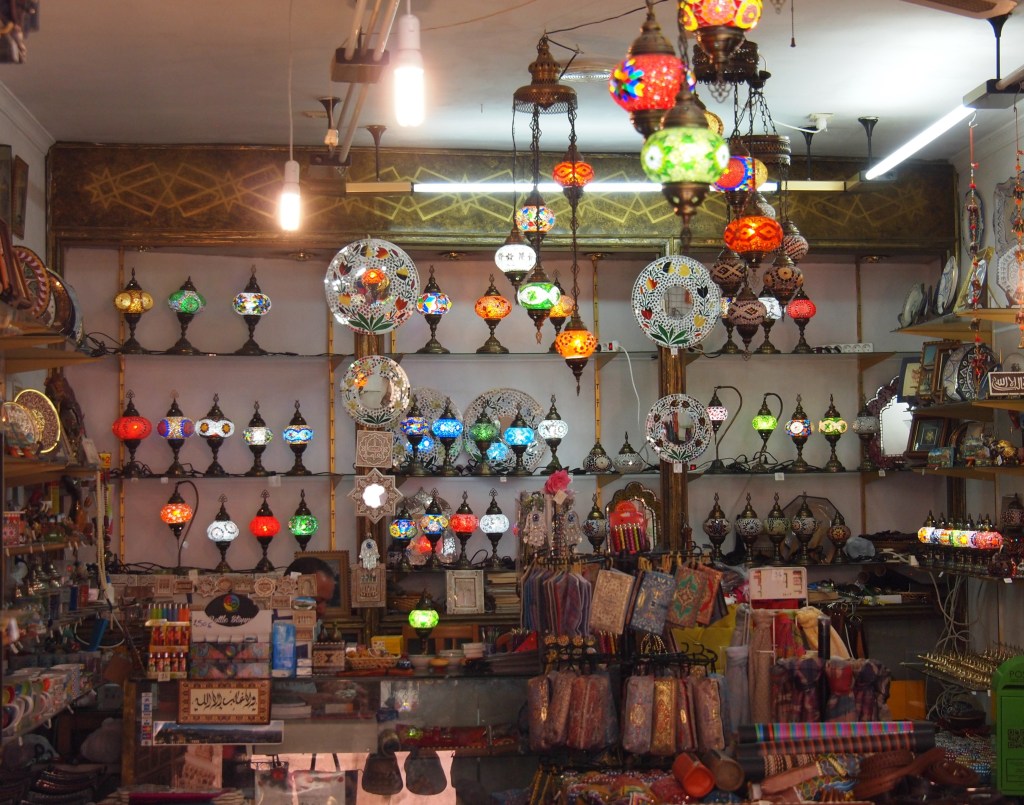
It was a good move. A teahouse lured us in. We had luscious tea and hummus just. In the shaded quiet, on soft cushions we sipped mint tea and watched the movement of strangers flicker past the window, catching snippets of murmured conversations passing on by.
For our final evening in Granada, we told the receptionist we planned to take a walk around Alhambra “for the last time”. He corrected us, “Never say ‘for the last time’ but rather ‘until next time’”.
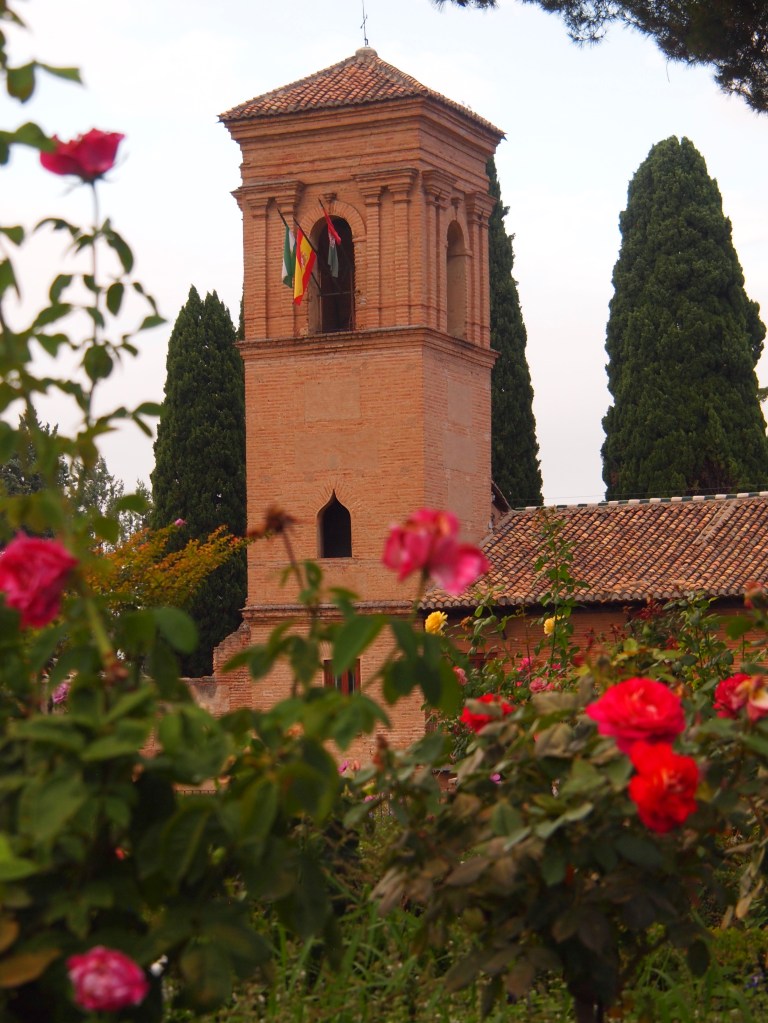
Under a hall-moon we were of the few and the brave that wandered the parapets. Not wanting to head inside yet, we chose to go for drinks at Parador San Francisco. Down a staircase, past a Michelin guide sticker and the dining room full of well-heeled guests, we found outdoor patio seats overlooking the valley and Generalife. Michele ordered 30-year-old sherry and I, 1925 Cerveza Alhambra. With a tapas of garlic prawns and olives, and the place to ourselves, we were very content. Who needed the white tablecloths and stuffier interior dining?


 Whittoons